

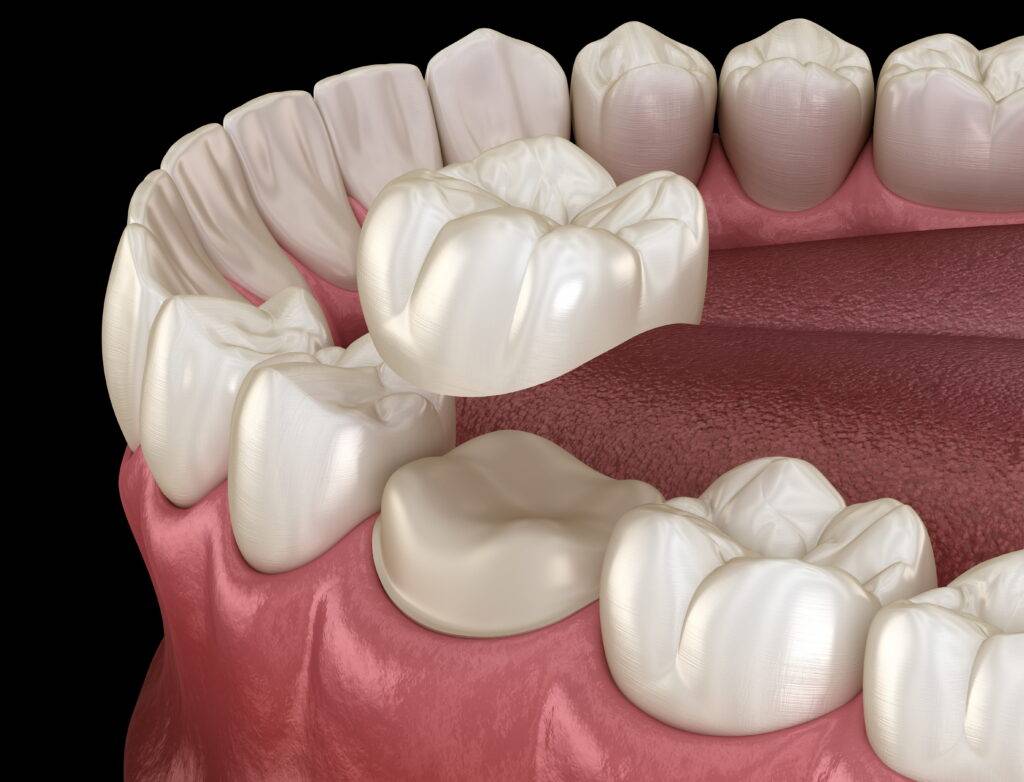
Dental crowns are one of the most common and versatile restorative treatments in dentistry, yet many patients still have questions about how they work, when they are needed, and what the experience feels like. If you have been told you may need a crown or you are researching options for restoring a damaged tooth, understanding the basics can make the decision process much easier.
At Springs Dental, we regularly help patients throughout Murrieta and nearby communities protect and restore their smiles with custom dental crowns. This guide walks through what dental crowns are, how they work, and what you can expect before, during, and after treatment.
What Is a Dental Crown?
A dental crown is a custom-made cap that covers the entire visible portion of a tooth above the gumline. Its purpose is to restore strength, shape, size, and appearance when a tooth has been weakened or damaged. Unlike a filling, which repairs only a portion of the tooth, a crown fully encases the tooth to provide long-term support.
Crowns are commonly used when a tooth has extensive decay, fractures, large fillings, or structural damage that makes it vulnerable to breaking. They are also used after root canal treatment, since teeth that have had the nerve removed can become brittle over time.
From an esthetics standpoint, modern dental crowns are designed to blend seamlessly with your natural teeth. When properly designed and placed, most people cannot tell which tooth has been restored.
Types of Dental Crowns
There are several types of dental crowns, and the best choice depends on the location of the tooth, your bite, and your personal goals for durability and appearance.
Porcelain and ceramic crowns are popular for front teeth because they closely mimic natural enamel. They are color-matched to your surrounding teeth and provide a very natural look.
Porcelain fused to metal crowns combine a metal base with a porcelain exterior. These have been used for decades and offer strength, although in some cases a dark line can become visible near the gumline over time.
Zirconia crowns have become increasingly common due to their strength and lifelike appearance. They work well for both front and back teeth and are often recommended for patients who grind their teeth.
Metal crowns, such as gold or other alloys, are extremely durable and resist wear. While they are not typically chosen for visible areas, they can be a practical option for molars where strength matters most.
Your dentist in Murrieta CA will review the pros and cons of each material and help you choose the option that best fits your needs.
The Dental Crown Process
Many patients are surprised by how straightforward the dental crown process can be. While exact steps may vary based on your individual situation, the general process typically involves two visits.
During the first appointment, your dentist examines the tooth and takes digital X-rays if needed. The tooth is then gently reshaped to make room for the crown. If a large portion of the tooth structure is missing, additional material may be used to build it up and ensure proper support.
Once the tooth is prepared, precise impressions or digital scans are taken. These are used to create a crown that fits your bite and matches your natural tooth color. A temporary crown is placed to protect the tooth while your permanent crown is being fabricated.
At the second visit, the temporary crown is removed and the final crown is carefully fitted. Your dentist checks the bite, shape, and comfort before bonding the crown into place. When properly placed, the crown should feel natural when you bite and chew.
When Is a Dental Crown Needed?
Dental crowns are recommended in several situations where preserving the natural tooth is still possible but additional support is necessary.
You may need a crown if you have a cracked or broken tooth, especially if the damage extends beyond what a filling can repair. Teeth with large fillings that compromise the remaining structure are also common candidates.
Crowns are frequently placed after root canal therapy to protect the treated tooth from fracture. They are also used to restore worn-down teeth caused by grinding or acid erosion.
In cosmetic cases, a crown may be recommended to correct severe discoloration, misshapen teeth, or alignment issues when other treatments are not suitable.
Ultimately, the goal is to protect the tooth while restoring comfort and function. Early evaluation often allows for more conservative treatment options.
Dental Crown and Pain: What to Expect
One of the most common concerns patients have is whether getting a dental crown is painful. The procedure itself is typically very manageable. Local anesthesia is used during tooth preparation, so most patients feel little to no discomfort during the appointment.
After the procedure, it is normal to experience mild sensitivity or soreness for a few days, particularly around the gum tissue. This usually resolves as your mouth adjusts. Over-the-counter pain relievers are often sufficient if needed.
If discomfort persists or your bite feels uneven, it is important to contact your dentist. A simple adjustment can often resolve the issue quickly.
At Springs Dental, patient comfort is a priority, and the team takes time to explain each step so you know what to expect.
Dental Crowns vs Veneers and Implants
Dental crowns, veneers, and implants all serve different purposes, and understanding the differences can help you make an informed choice.
Crowns are restorative and protective, covering an existing tooth that is still structurally present. Veneers are thin shells placed on the front surface of teeth and are primarily cosmetic. They do not provide the same level of strength or coverage as crowns.
Dental implants, on the other hand, replace an entire missing tooth, including the root. They involve placing a titanium post into the jawbone, followed by a crown that attaches to the implant. Implants are an excellent option when a tooth cannot be saved, but they are not typically used when the natural tooth can still be restored.
Your dentist in Murrieta CA will help determine which option aligns best with your oral health and long-term goals.
Caring for Your Dental Crown
Caring for a dental crown is similar to caring for your natural teeth. Daily brushing and flossing are essential to keep the surrounding gums healthy and prevent decay at the margins of the crown.
It is important to avoid chewing ice, hard candies, or using your teeth as tools, as these habits can damage both crowns and natural teeth. If you grind your teeth at night, a custom night guard may be recommended to protect your investment.
Regular dental checkups allow your dentist to monitor the condition of your crown and address any concerns early. With proper care, many crowns last 10 to 15 years or longer.
Murrieta Dental Crowns
Choosing the right provider matters when it comes to restorative dental care. Murrieta dental crowns should be carefully designed, precisely fitted, and supported by thorough planning to ensure long-term success.
At Springs Dental, crowns are crafted to balance durability, comfort, and natural appearance. Every treatment plan is personalized, taking into account your bite, oral health history, and esthetic preferences.
Patients from Murrieta, French Valley, and nearby areas trust the team for attentive care and clear communication throughout the process.
Dentist in Murrieta CA
If you are looking for a dentist in Murrieta, CA who takes the time to explain your options and prioritize your comfort, Springs Dental offers comprehensive restorative services under one roof.
From initial evaluation to final placement, the focus remains on preserving your natural smile whenever possible. Modern technology and a patient-first approach help make each visit efficient and reassuring.
Whether you need a single crown or have questions about long-term restorative planning, a consultation can provide clarity and confidence.
Contact Springs Dental Today
If you think you may need a dental crown or have been experiencing tooth discomfort, reaching out sooner can help prevent further damage. Early treatment often leads to simpler solutions and better outcomes.
Contact Springs Dental today to schedule an appointment and learn more about your options for dental crowns in Murrieta. The team is happy to answer questions and guide you through each step of care.
Meet Us
Meeting your dental team should feel comfortable and welcoming. Springs Dental is proud to serve the Murrieta community with a focus on trust, transparency, and personalized care.
Whether you are new to the area or looking for a dental home that puts your needs first, you are invited to meet us and experience dentistry centered around your comfort and long-term health.